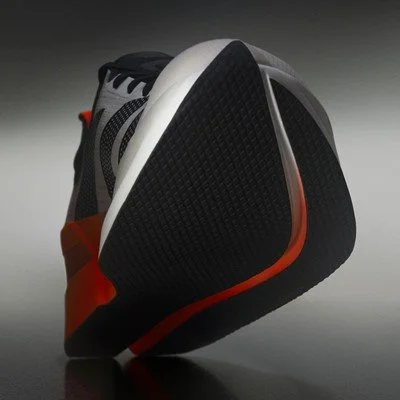
Grip
The shoe you wear for HYROX will need a sufficient amount of grip. This is primarily for the sled pull and sled push exercises, but can also be important for slippery areas on the floor (especially in places where water has been spilt).If you have a lack of grip on your footwear when pushing or pulling the sleds, your feet can slip on the carpet, thereby making something very hard, much harder. This is certainly something that has caught out many HYROX competitors in past events.
Heel Counter
The heel counter is at the heel of the shoe and helps to provide stability to the back of the foot. It can be an important consideration for HYROX as if the shoe you’re using doesn’t have a solid heel counter, which fits snugly and securely around your foot, your feet could slip out of the trainer when pushing the sled (even if it feels fine when running).
Stack Height
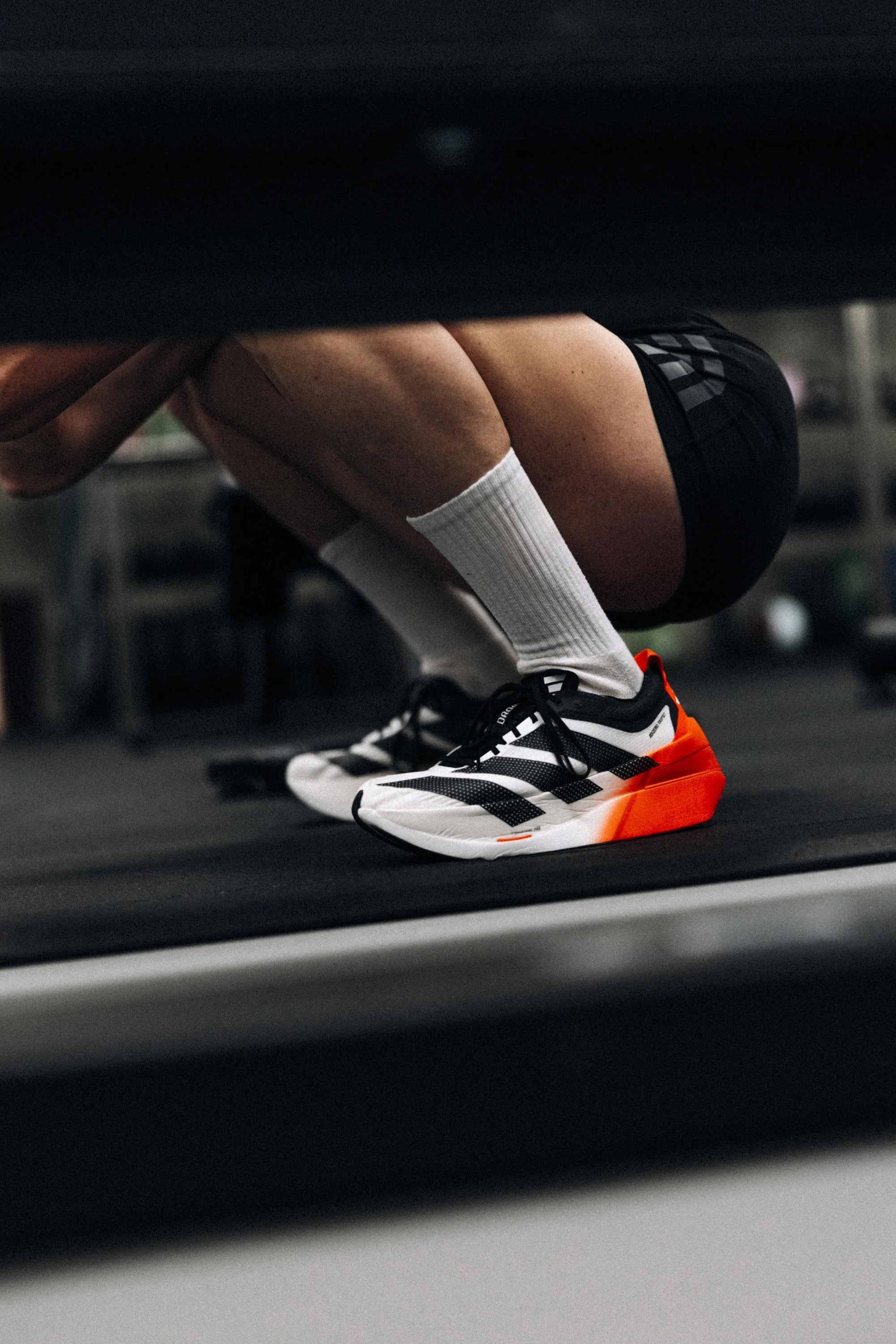
Finally, we should discuss the stack height of the shoe. This refers to the amount of foam on the bottom of the trainer, essentially separating your foot from the ground. The more height / foam a shoe has normally makes it feel bouncier, and more comfortable over long distance runs.An example of shoes with a high stack height are the Nike Vaporfly(40mm) and Nike Alphafly (39mm). World Athletics have said the max stack height for road racing is 40mm (which is why a lot of companies – like Nike – are bringing their road running shoes close to that maximum). However, a stack height this high isn’t always ideal for HYROX as they can sometimes feel as if they lack stability.
Stability is rarely a problem for a basic road race where there aren’t too many tight twists and turns. But in HYROX there are plenty of corners to get round when running the laps. You’d also potentially lose vital seconds getting your foot under the straps when getting on to the rower. This is another one of those areas that come down to personal preference.